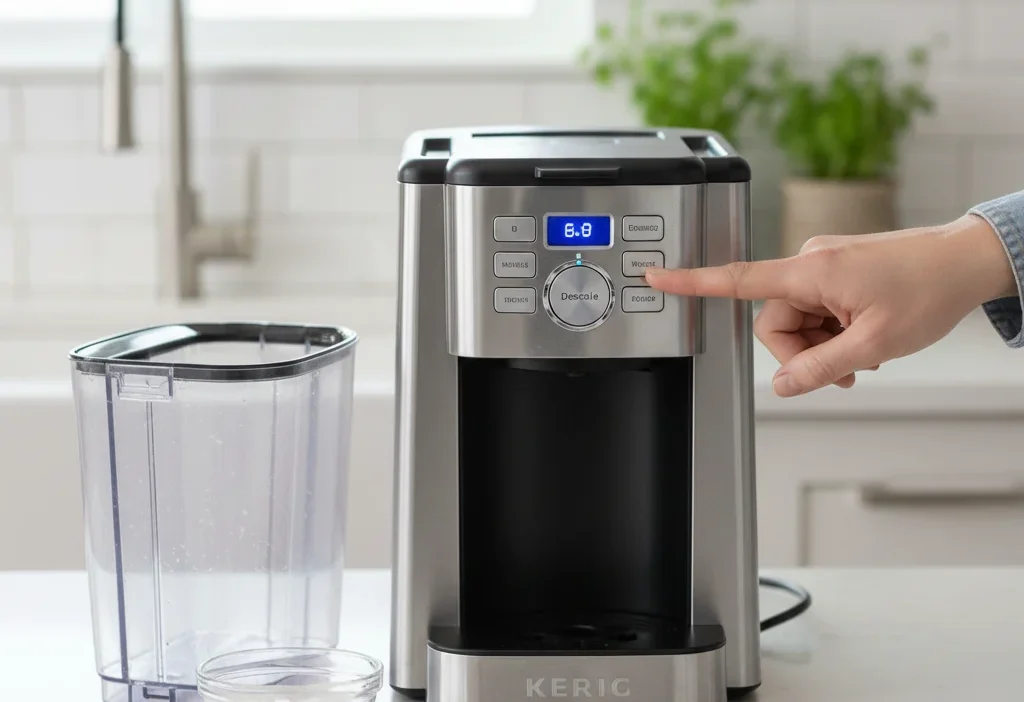
I’ll never forget the first time I saw it. I was half-asleep, fumbling for my morning cup of ambition, when a strange, ominous light on my Keurig stopped me cold. It wasn’t the friendly “Ready to Brew” glow I craved. It was a blinking “Descale” light. My heart sank. Was it broken? Was my coffee-making companion on its last legs? If you’ve been there, staring at that same confusing signal, wondering what on earth your machine is trying to tell you, you’re in the right place. Let’s demystify this together.
: “Descale” means to clean out the mineral scale buildup inside your Keurig. It’s a maintenance process that removes limescale and calcium deposits caused by hard water, ensuring your machine runs efficiently and your coffee tastes great.
🧠 What Does the “Descale” Light Actually Mean?
When your Keurig’s “Descale” indicator lights up, it’s not a sign of a malfunction; it’s a friendly—albeit persistent—reminder from your appliance. Think of it like the “change oil” light in your car. Your machine has an internal sensor or timer that tracks its usage. After brewing a certain number of cups (often around 250-300), it calculates that enough minerals have likely built up to warrant a cleaning cycle. This descaling process is essential for the long-term health of your Keurig. It’s the machine’s way of saying, “I’ve been working hard for you, and I need a little internal spa day to get back to my best.”
In short: Descale = Remove Mineral Buildup = Essential Keurig Maintenance.
📱 Why Is Descaling So Important for Your Coffee Maker?
Ignoring the descale light might seem like an easy way to postpone a chore, but it has real consequences for your machine and your morning brew. Here’s why you shouldn’t hit the snooze button on this alert:
- Clogged Pathways: Mineral scale acts like plaque in arteries, narrowing and blocking the tiny tubes and needles that water flows through.
- Slower Brew Times: As the pathways clog, your Keurig has to work harder to push water through, leading to painfully slow drip… drip… drips… into your mug.
- Weird-Tasting Coffee: Scale buildup can impart a bitter, metallic, or just “off” taste to your coffee, masking the true flavor of your favorite roast.
- Inconsistent Temperature: The heating element can become insulated by scale, preventing your water from getting hot enough for a proper extraction.
- Total Machine Failure: In severe cases, a heavily scaled-up heating element can overwork and burn out, leading to a costly repair or the need for a brand-new machine.
🛠️ The Science of Scale: What Exactly Are You Removing?
To understand descaling, it helps to know your enemy. The white, chalky buildup you’re removing is primarily calcium carbonate (limescale). It comes from the minerals naturally present in your tap water, known as water hardness. When you heat water, these minerals become less soluble and solidify, sticking to the hottest parts of your Keurig—mainly the internal hot water tank and heating element. Over time, this layer becomes thicker and more problematic, which is why using a Keurig descaling solution or a recommended alternative is crucial for breaking down these tenacious deposits.
✅ What You’ll Need to Descale Your Keurig
Before you begin the descaling mode, gather your supplies. You have a couple of effective options:
- Keurig Official Descaling Solution: This is the manufacturer-recommended option. It’s specifically formulated to dissolve mineral scale without damaging the internal components of your machine.
- White Vinegar: A common and cost-effective household alternative. While effective, some users report that the vinegar smell can linger for a cycle or two after cleaning.
- Fresh Water: You’ll need a full reservoir of fresh water for both the descaling and rinsing cycles.
- A Large Mug or Bowl (at least 16 oz): You’ll be running liquid through the machine without a K-Cup pod.
💬 A Step-by-Step Guide to the Keurig Descaling Process
While the exact button sequence can vary slightly by model (K-Classic, K-Elite, K-Supreme, etc.), the general descaling procedure is universal. Always consult your user manual for model-specific instructions.
- Power Up & Prepare: Ensure your Keurig is on. Remove the water filter from the reservoir, if you have one.
- Mix the Solution: Pour the entire bottle of Keurig descaling solution into the empty water reservoir. Then, fill the rest of the reservoir with fresh water until you reach the max fill line.
- Enter Descaling Mode: Place your large mug on the drip tray. For most models, you start the descale cycle by pressing and holding the “8 oz” and “12 oz” buttons simultaneously for a few seconds until the descale light begins to flash.
- Start the Rinse Cycle: Press the “Brew” button to begin. The machine will dispense the descaling solution into your mug in intervals. This can take 30+ minutes. Do not use a K-Cup pod!
- The Soaking Period: Once the reservoir is empty, let the machine sit for 30 minutes. This soaking time is critical as it allows the solution to work its magic and dissolve the scale.
- The Rinse Cycle: After 30 minutes, discard the liquid in your mug. Refill the water reservoir completely with fresh water. Place the mug back and run multiple brew cycles (again, without a pod) until the entire reservoir is empty. This rinses out any remaining descaling solution and loosened scale.
- Final Reset: Once fully rinsed, the descale light should turn off. If it doesn’t, you may need to power cycle the machine (turn it off and on again).
🔄 When to Use a Descaling Solution vs. Regular Cleaning
It’s important to distinguish between daily upkeep and deep cleaning. Here’s a quick comparison:
| Task | Purpose | Frequency |
|---|---|---|
| Descaling | Removes internal mineral scale and calcium deposits. | Every 3-6 months, or when the light comes on. |
| Cleaning the Exit Needle | Removes coffee grounds and film from the K-Cup puncture needle. | Weekly or every few weeks. |
| Washing the Water Reservoir | Cleans the removable part where you add water. | Weekly with warm, soapy water. |
❓ Troubleshooting Common Descaling Problems
Sometimes, things don’t go perfectly. Here’s how to handle common descaling hiccups:
- The Descaling Mode Won’t Start: Double-check your model’s manual. The button combination can be tricky. Ensure you’re pressing and holding the correct buttons for the right amount of time.
- The Descale Light Won’t Turn Off: You may need to complete a full power cycle (unplug the machine for 60 seconds, then plug it back in). If that fails, the rinse cycle may not be complete. Run another full reservoir of fresh water through the machine.
- My Coffee Still Tastes Funny: If you used vinegar, it can take 2-3 brewing cycles with fresh water to completely eliminate the odor. If the taste persists, you may need to repeat the descaling process if the buildup was severe.
🚫 What Happens If You Never Descale Your Keurig?
Put simply, you’re signing up for a world of caffeinated frustration. The machine will gradually perform worse. You’ll experience slower brews, lukewarm coffee, and eventually, the machine may just stop working altogether. The cost of a bottle of descaling solution is a tiny fraction of the price of a new Keurig, making regular descaling one of the smartest investments you can make for your appliance.
✅ When to Descale and When Not to Worry
Creating a simple schedule can take the guesswork out of this essential task.
✅ When to Descale:
- When the “Descale” light is illuminated or blinking.
- If your brew time has noticeably slowed down.
- If your coffee isn’t as hot as it used to be.
- As part of seasonal maintenance every 3-6 months.
❌ When Not to Descale:
- If the machine is brand new.
- If you’ve just descaled it a week ago.
- If you only use distilled or perfectly soft water (which is rare for most households).
🔄 Similar Maintenance Terms You Should Know
| Term | Meaning | Application |
|---|---|---|
| Descaling | Removing mineral scale (limescale) from inside the machine. | Keurig, Espresso Machines, Electric Kettles. |
| Cleaning Cycle | Often refers to running water or a cleaning pod through the brew system to remove coffee oils. | Keurig, Drip Coffee Makers. |
| Sanitizing | Killing bacteria and germs, often with a bleach or citric acid solution. | Baby Bottles, Water Bottles, Surfaces. |
❓ FAQs
How long does it take to descale a Keurig?
The entire process, including the 30-minute soak, typically takes about 60-90 minutes.
Can I use vinegar instead of Keurig descaling solution?
Yes, white vinegar is a common and effective alternative. However, some users prefer the official solution to avoid any potential vinegar aftertaste.
How often should I descale my Keurig?
Keurig recommends descaling every 3 to 6 months, but this depends on your water hardness and how frequently you use the machine. Let the “Descale” light be your guide.
Why is my descale light still on after descaling?
The machine may need to be reset. Try unplugging it for 60 seconds and plugging it back in. If it persists, ensure you’ve run enough rinse cycles to clear the system.
Is it safe to drink coffee from a Keurig that needs descaling?
While it’s not harmful, the coffee will likely taste bad due to the mineral buildup affecting the water’s temperature and flow.
☕ Conclusion
That blinking “Descale” light is no longer a mystery. It’s not a warning of doom, but a simple, proactive reminder to care for your hard-working coffee maker. Embracing the descaling process is the secret to years of reliably delicious, hot coffee. It’s a straightforward task that pays off immensely in performance and peace of mind. So, the next time that light glows, you’ll know exactly what to do. Your Keurig—and your taste buds—will thank you for it.

Silvina Ocampo is a spiritual writer and analyst of dream symbolism. With a background in literature and mystical studies, she uncovers the deeper meanings behind dreams and their connection to the human psyche. Silvina’s writings invite readers to explore the hidden layers of their dreams and awaken their inner wisdom.