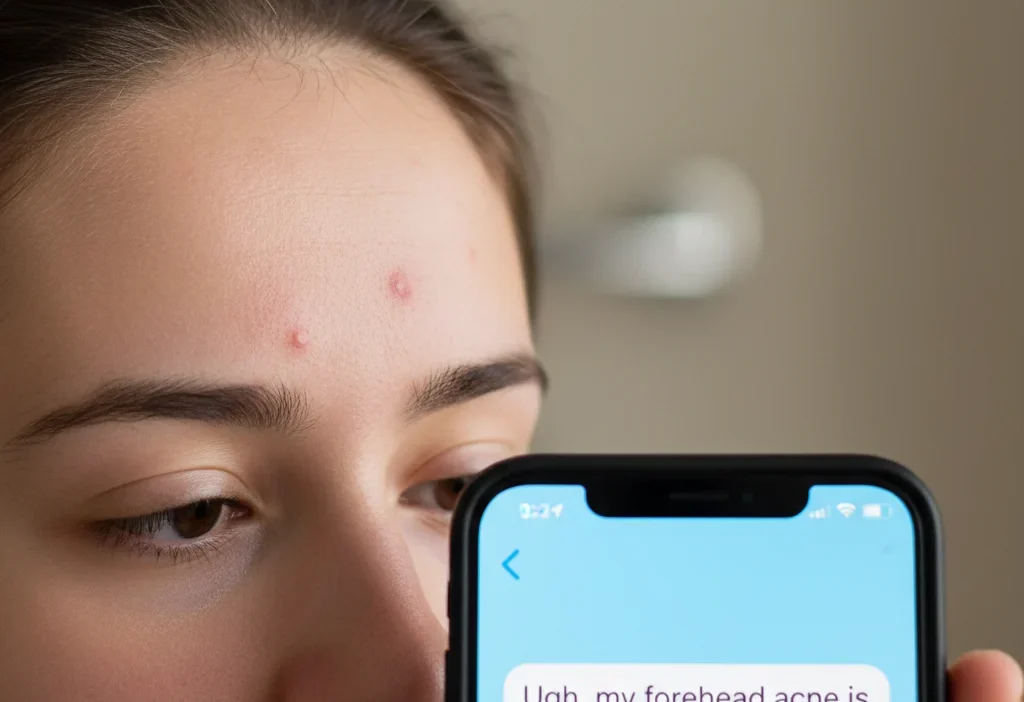
I’ll never forget my first big job interview. I was 22, suit pressed, resume perfect, and feeling ready. That is, until I looked in the mirror that morning. A constellation of red, angry bumps had decided to throw a party right in the center of my forehead. My confidence plummeted. All I could think was, “Why there? Why now? What is my forehead trying to tell me?” If you’ve ever found yourself staring at a breakout, desperately searching for answers beyond “just wash your face,” you’re not alone. Forehead acne is one of the most common and frustrating skin concerns, but it’s also one of the most communicative. Those pimples are often your skin’s way of sending you a message.
“Forehead acne” refers to pimples, blackheads, and cysts that appear specifically on the forehead. It’s often a visible sign of internal factors like stress, diet, and hormonal fluctuations, or external factors like hair products, harsh skincare, and poor hygiene. In short, it’s your skin’s SOS signal.
🧠 What Does Forehead Acne Mean?
In the simplest terms, forehead acne means that the hair follicles and pores on your forehead are clogged. This clogging is usually a combination of excess sebum (your skin’s natural oil), dead skin cells, and bacteria. However, the location of the acne is key. In face mapping, a practice rooted in both traditional medicine and modern dermatology, the forehead is often linked to the digestive system and the mind. So, when acne pops up there, it’s frequently your body’s way of highlighting issues related to stress, digestion, or even the products you’re using in your hair or on your skin. It’s less of a random occurrence and more of a targeted alert.
In short: Forehead Acne = Clogged Pores + Internal/External Triggers = A Signal from Your Body.
📱 Where Is Forehead Acne Commonly a Concern?
Forehead acne doesn’t discriminate, but it’s a top-of-mind concern (pun intended) in certain circles:
- 👥 Teenagers & Young Adults: Thanks to rampant hormonal changes during puberty.
- 💼 Stressed-Out Professionals: The “stress pimple” on the forehead is a universal badge of burnout.
- 🏋️ Gym-Goers & Athletes: Sweat, bacteria from equipment, and tight headbands are a common culprit.
- 💁 People with Fringe/Bangs: Hair constantly rubbing on the forehead traps oil and dirt.
- 📱 Social Media & Forums: Places like Reddit’s SkincareAddiction, TikTok, and YouTube are filled with people seeking and sharing advice.
It’s a casual yet deeply personal topic—you might not bring it up in a formal board meeting, but you’ll definitely see it discussed in friend chats, wellness blogs, and online skincare communities.
🧬 The Science Behind the Bumps: What’s Actually Happening?
To truly understand what forehead acne means, we need a quick science lesson. Your skin is covered in tiny pores connected to oil glands. These glands produce sebum to keep your skin lubricated. Sometimes, this system goes haywire:
- Excess Sebum Production: Hormones (especially androgens) can signal your glands to produce too much oil.
- Clogged Pores: Dead skin cells don’t shed properly and mix with the excess oil, forming a plug in the pore.
- Bacterial Party: A bacteria called C. acnes thrives in this clogged, oily environment, leading to inflammation.
- Inflammation: Your immune system attacks the bacteria, resulting in the red, swollen, and tender bumps we know as pimples.
When this process happens on your forehead, it’s often because that T-zone area has a higher concentration of these oil glands.
🗺️ Face Mapping 101: What Your Forehead is Trying to Tell You
Face mapping provides a fascinating lens through which to view your breakouts. While not an exact science, it can offer valuable clues.
- Upper Forehead (Hairline): This is often linked to the bladder and digestive system. Think about the products you use—does your shampoo or conditioner clog pores? It could also be from not washing your face thoroughly along the hairline.
- Center Forehead: Breakouts here are classically tied to the liver and digestive issues. This could point to a poor diet, food intolerances, or toxin buildup.
- Between the Brows: This area is connected to the liver and can also be influenced by alcohol consumption or rich foods.
🚨 Top 6 Culprits: What Causes Forehead Acne?
Let’s break down the most common internal and external triggers.
1. Hormonal Havoc
Hormonal fluctuations are a prime suspect. During puberty, menstruation, pregnancy, or times of high stress, androgen hormones surge, increasing sebum production. This is why you might get a breakout right before your period.
2. Stress & Sleep Deprivation
When you’re stressed, your body produces more cortisol. This “stress hormone” can worsen inflammation and tell your oil glands to go into overdrive. Lack of sleep compounds this effect, disrupting your body’s natural healing processes.
3. Diet & Digestion
The gut-skin connection is real. Diets high in sugar, refined carbohydrates (like white bread and pasta), and dairy have been linked to increased breakouts in some people. These foods can spike your blood sugar and promote inflammation.
4. Hair Products (Pomade Acne)
Your favorite shampoo, conditioner, hairspray, or styling gel could be the villain. These products often contain oils, silicones, and other ingredients that can drip onto your forehead and clog pores. This is so common it has its own name: pomade acne.
5. Poor Skincare Habits
Using products that are too harsh can strip your skin, causing it to produce more oil to compensate. Conversely, not washing your face enough, especially after sweating, or using heavy, comedogenic (pore-clogging) moisturizers can also lead to breakouts.
6. Hats & Helmets
Wearing hats, headbands, or helmets frequently can create friction and trap sweat, oil, and bacteria against the skin on your forehead, leading to irritation and pimples.
💬 Examples of Forehead Acne in Conversation
Seeing how people actually talk about it can make it more relatable.
A: ugh i have a huge pimple right in the middle of my forehead. it’s so visible 😭
B: classic stress zit. are you still swamped with that work project?
A: my forehead has been breaking out so bad lately, idk why
B: did you start using a new hair product? my conditioner used to do that to me
A: i’ve cut out dairy for a week and my forehead is already clearing up!
B: no way! maybe i should try that. my skin has been a mess.
A: sends a selfie do you think this hat is cute?
B: yeah but be careful, wearing hats all day gives me forehead acne 😅
A: i’m so tired, only got 4 hours of sleep
B: i can tell, your skin is looking a little stressed. get some rest!
✅ When to Use and When Not to Use Forehead Acne as a Clue
✅ When to Pay Attention to Your Forehead Acne
- When you’re under prolonged periods of high stress.
- After starting a new medication, haircare, or skincare product.
- When your diet has been consistently poor (high in sugar/processed foods).
- If you notice a pattern linked to your menstrual cycle.
- When you’ve been wearing hats or helmets frequently.
❌ When to Look Elsewhere for Answers
- If the acne is widespread all over your face and body (could be a systemic issue).
- If it’s severe, cystic, painful, and doesn’t respond to over-the-counter treatments.
- If you suspect a serious allergic reaction.
- Always consult a dermatologist for persistent, painful, or scarring acne.
| Context | Example Phrase | Why It Works |
|---|---|---|
| Friend Chat | “Ugh, my forehead is breaking out, must be stress from finals 😫” | Casual & relatable, using it as a clue for a lifestyle factor. |
| Skincare Forum | “I get forehead acne when I use silicones in my hair products.” | Informative & helpful, sharing a specific cause and effect. |
| Doctor’s Visit | “I’ve been experiencing persistent forehead acne and I’m concerned it’s hormonal.” | Formal & clear, seeking professional medical advice. |
🛠️ Your Action Plan: How to Get Rid of Forehead Acne
Fixing forehead acne involves a two-pronged approach: topical treatments and lifestyle adjustments.
1. Revamp Your Skincare Routine
- Gentle Cleanser: Use a sulfate-free, gentle cleanser twice daily.
- Exfoliate: Use a BHA (Beta Hydroxy Acid) like salicylic acid 2-3 times a week. It’s oil-soluble, meaning it can dive into pores and dissolve the gunk inside.
- Treat: Spot treat with benzoyl peroxide to kill acne-causing bacteria.
- Moisturize: Yes, even oily skin needs moisture! Use a non-comedogenic, oil-free gel moisturizer.
- Sunscreen: Protect your skin from UV damage which can cause inflammation and post-acne dark spots.
2. Make Lifestyle Tweaks
- Manage Stress: Try meditation, yoga, or even just going for a walk.
- Improve Your Diet: Reduce sugar and processed foods. Incorporate more anti-inflammatory foods like leafy greens, berries, and fatty fish.
- Hydrate: Drink plenty of water to help flush out toxins.
- Change Your Pillowcase: At least once a week to prevent bacteria buildup.
- Wash After Sweating: Always cleanse your face after a workout.
🔄 Similar Skin Concerns or Alternatives
Sometimes, what you think is acne might be something else. Here’s a quick comparison:
| Skin Concern | Meaning | Key Identifiers |
|---|---|---|
| Fungal Acne | An overgrowth of yeast in hair follicles. | Tiny, uniform, itchy bumps that don’t respond to traditional acne treatments. |
| Closed Comedones | Clogged pores that are covered by skin. | Small, flesh-colored bumps (whiteheads). |
| Cystic Acne | Severe, inflamed acne deep within the skin. | Large, red, painful, pus-filled lumps that can cause scarring. |
| Contact Dermatitis | A red, itchy rash caused by an allergic reaction. | Itchy, inflamed skin that might feel like a burn; appears after using a new product. |
❓FAQs About Forehead Acne
Q: What does acne on the forehead mean spiritually?
A: Some believe forehead acne is tied to the “third eye” chakra, representing intuition and insight. A breakout here could symbolize worry, overthinking, or a lack of trust in your own path.
Q: Can drinking water clear forehead acne?
A: While not a magic cure, staying hydrated helps your body flush out toxins and can improve your skin’s overall health and elasticity, which can reduce the severity of breakouts.
Q: How long does it take for forehead acne to go away?
A: With a consistent and correct routine, you can see improvement in surface pimples within a few days to a week. Deeper, hormonal acne may take several weeks or even months to resolve fully.
Q: Is forehead acne a sign of pregnancy?
A: It can be! Hormonal changes during early pregnancy can definitely cause breakouts, including on the forehead. However, it’s not a reliable sign on its own and should be considered alongside other symptoms.
Q: Should I pop my forehead pimple?
A: Do not pop it! Popping pimples, especially on the forehead, can push bacteria deeper, increase inflammation, and lead to permanent scarring. It’s best to treat it with topicals and let it heal.
👋 Conclusion
Forehead acne is more than just a surface-level nuisance; it’s a messenger. By learning to decode what it means—be it stress, your salad dressing, or your styling cream—you empower yourself to take targeted action. Remember, the journey to clear skin is rarely a straight line. It requires patience, consistency, and a bit of detective work. Start by observing the patterns, tweak your habits one at a time, and don’t be afraid to seek help from a dermatologist if you need it. Your forehead is talking. Now you know how to listen.

Silvina Ocampo is a spiritual writer and analyst of dream symbolism. With a background in literature and mystical studies, she uncovers the deeper meanings behind dreams and their connection to the human psyche. Silvina’s writings invite readers to explore the hidden layers of their dreams and awaken their inner wisdom.