Have you ever been scrolling through TikTok, Instagram, or a friend’s chat and noticed the abbreviation RBF and thought, “Wait… what does that even mean?” You’re not alone. Many people encounter this slang online or in messages and have no clue what it signifies. At first, it can be confusing, especially if someone jokes about their “RBF” in a conversation or meme.
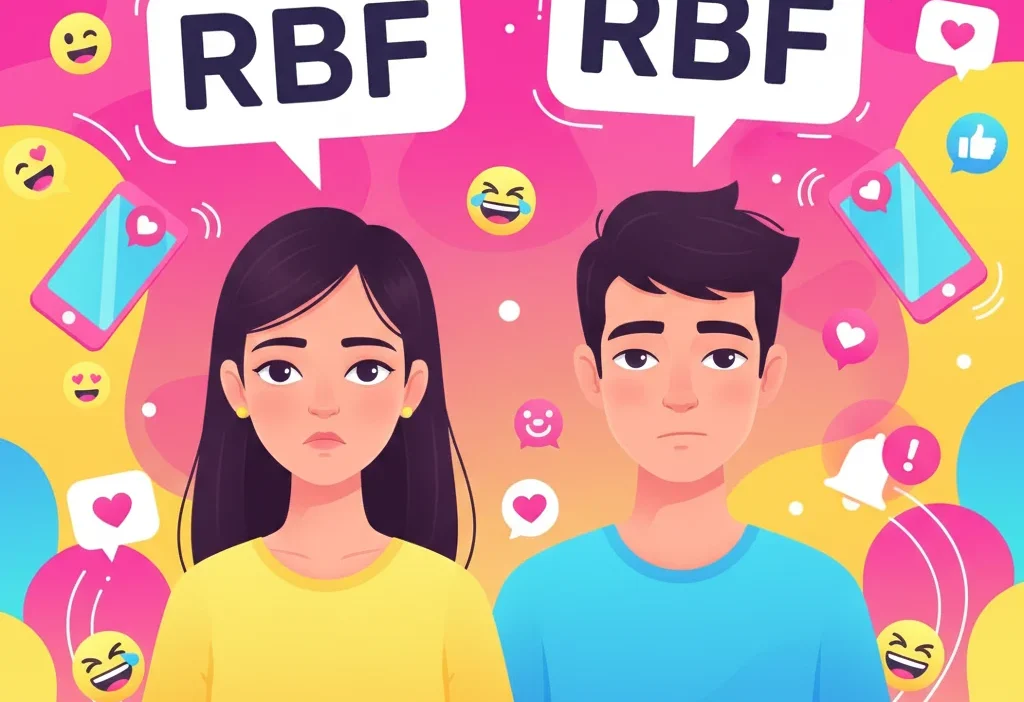
RBF means “Resting Bitch Face.” It’s a casual, playful term used to describe a neutral facial expression that unintentionally looks annoyed, unapproachable, or judgmental.
Whether you’re reading texts, scrolling memes, or seeing someone’s selfies, understanding RBF helps you get the joke — or even use it yourself.
🧠 What Does RBF Mean in Text?
RBF stands for Resting Bitch Face, which refers to a person’s natural face that appears annoyed, angry, or judgmental, even when they’re perfectly calm. It’s not an insult; it’s just a term people use to describe this common expression.
Example:
A: “Why does Sarah look so mad in photos?”
B: “It’s just her RBF 😅”
In short: RBF = Resting Bitch Face = neutral face that might look irritated or serious.
📱 Where Is RBF Commonly Used?
RBF is mostly popular in casual online communication. Here’s where you’ll often see it:
- Snapchat 👻 — in streaks, chats, and selfies
- TikTok 🎵 — trending videos and reactions
- Instagram 📸 — captions, comments, and memes
- Texting / iMessage 💬 — friend chats and group texts
- Discord & gaming chats 🎮 — playful banter
⚠️ Tone: RBF is casual, playful, and humorous. Avoid using it in formal, professional, or serious contexts.
💬 Examples of RBF in Conversation
Here are authentic texting examples to show RBF in action:
A: “Why are you so quiet?”
B: “Just my RBF kicking in 😏”
A: “She looks upset again lol”
B: “Nah, it’s just RBF 😅”
A: “Can you smile for the pic?”
B: “Trying, but RBF won’t let me 😬”
A: “Why is he staring like that?”
B: “Classic RBF face 😎”
A: “She seems mean”
B: “She’s not, that’s just RBF 😂”
A: “Do you always look annoyed?”
B: “Me? Never… just RBF 😝”
A: “Are you mad at me?”
B: “Nope, RBF says otherwise 😅”
These examples show how RBF is used in casual, humorous texting, often with emojis to soften the tone.
🕓 When to Use and When Not to Use RBF
✅ When to Use RBF:
- Friendly chats with close friends
- Self-deprecating humor
- Memes and funny social media captions
- Light teasing among peers
❌ When Not to Use RBF:
- Work emails or professional communication
- Serious discussions (health, finance, personal issues)
- Any situation requiring formal politeness
- Messages to someone who might misinterpret humor
| Context | Example Phrase | Why It Works |
|---|---|---|
| Friend Chat | “No rush, RBF 😄” | Casual & friendly |
| Work Chat | “Take your time.” | Polite & professional |
| “Please review this” | Formal & clear |
🔄 Similar Slang Words or Alternatives
| Slang | Meaning | When to Use |
|---|---|---|
| SMH | Shaking My Head | Frustration / disbelief |
| LOL | Laugh Out Loud | Humor / funny moments |
| IDK | I Don’t Know | Casual uncertainty |
| FOMO | Fear Of Missing Out | Social events, trends |
| YOLO | You Only Live Once | Casual / adventurous |
| TBH | To Be Honest | Honest opinion |
These words often appear alongside RBF in casual chats or memes.
🤔 RBF in Pop Culture
RBF has become a staple of internet culture, appearing in:
- Memes — poking fun at celebrities or friends
- TV shows & movies — describing serious or “judgmental” characters
- Social media trends — selfies, TikTok reactions, Instagram stories
Example:
“When a celebrity stares at the camera without smiling… total RBF vibes 😎”
Memes often exaggerate RBF humorously, making it a relatable topic for many online users.
🔍 RBF vs. Other Facial Expressions
Understanding RBF helps avoid misinterpretation:
| Expression | Meaning | Key Difference from RBF |
|---|---|---|
| RBF | Neutral face, may look annoyed | Unintentional, casual |
| Angry face | Actual anger | Emotionally driven |
| Bored face | Disinterest or fatigue | Temporary, context-based |
| Smiling face | Happiness or friendliness | Opposite of RBF |
📸 How to Deal With Your Own RBF
Many people worry about having RBF. Here are some tips:
- Practice subtle smiles — just a small smile can soften your expression
- Mind your posture — relaxed shoulders help your face look less tense
- Use humor — joking about your RBF can make others more comfortable
- Take candid photos — overthinking can worsen RBF
Remember: RBF is normal, common, and often harmless.
📝 RBF for Social Media Selfies
RBF can be funny and stylish in selfies:
- Use the term in captions: “Serving RBF today 😏”
- Make memes from your own expressions
- Tag friends in playful posts about their RBF
This approach turns RBF into a social media confidence booster rather than a negative trait.
❓ FAQs About RBF
Q1: Is RBF offensive?
A: Not really — it’s usually playful. Context matters, avoid using it professionally.
Q2: Can anyone have RBF?
A: Yes, many people naturally have it. It’s more about perception than intent.
Q3: Can RBF be changed?
A: You can practice subtle smiling or relaxed expressions, but it’s mostly natural.
Q4: Is RBF only for women?
A: No, anyone can have RBF. Though culturally, it’s more joked about for women.
Q5: Can I use RBF in texts?
A: Absolutely! Just keep it casual, humorous, and friendly.
Q6: Does RBF mean someone is mean?
A: Not at all. RBF only describes facial expression, not personality.
Q7: Is there a polite alternative to RBF?
A: Yes, terms like “neutral face” or “serious expression” work in professional contexts.
✅ Conclusion
RBF — Resting Bitch Face — is a casual slang term for a neutral expression that can appear annoyed or unapproachable. Widely used in texting, memes, and social media, it’s often playful, humorous, and relatable.
By understanding RBF, you can navigate conversations, memes, and online trends more confidently. You’ll also know when it’s appropriate to joke about it and when to stay professional. Next time you see RBF, you’ll recognize it immediately — and maybe even laugh about your own.

Leonora Carrington is an imaginative storyteller and dream researcher, specializing in the spiritual and surreal aspects of dreams. She combines artistic insight with symbolic interpretation, helping readers uncover the messages woven into their nightly visions. Leonora believes that dreams are gateways to creativity and personal transformation.