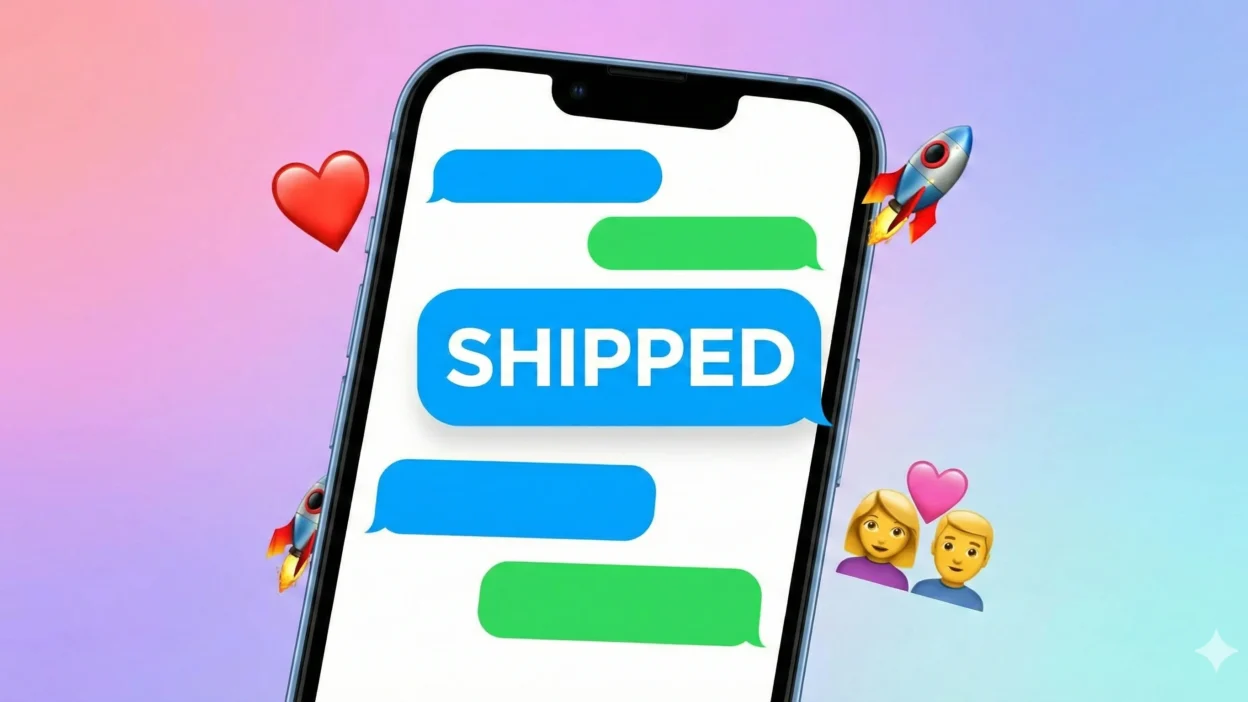
“Shipped” in slang means enthusiastically supporting or rooting for a romantic relationship, either real or fictional. It’s a fun, fandom-friendly way of saying, “I love them together!”
Ever been deep in the comments of your favorite TV show or scrolling through a friend’s cute vacation pics and seen someone declare, “I SHIP THEM!” or “They are totally shipped!”? If you paused, scratched your head, and wondered if this was some new Amazon Prime delivery notification gone rogue, you’re not alone. My first encounter was in a fan forum for a baking show, where people were fervently “shipping” two contestants who had shared a whisk. I was utterly lost, convinced it had something to do with international pastry logistics. Spoiler: It doesn’t. Welcome to the world of modern digital lingo, where “shipped” has nothing to do with boats and everything to do with hearts. Let’s decode this ubiquitous piece of internet culture.
🧠 What Does “Shipped” Mean in Text?
In the world of texting and social media slang, “shipped” is the past tense of the verb “to ship.” This “ship” is a shortening of the word “relationship.”
To “ship” two people (or characters) means you enthusiastically support, endorse, or are a fan of their romantic pairing. You want to see them become a couple, you think they have chemistry, and you’re rooting for their relationship to happen or continue. When you say two people “are shipped” or that you “have shipped them,” it means you are on board with their romantic connection.
Example: “Did you see the new season? I’ve shipped Alex and Sam since episode one!”
In short: Shipped = Supporting a Relationship = “I’m a fan of them as a couple.”
📱 Where Is “Shipped” Commonly Used?
The term “shipped” is a cornerstone of online fan and social media culture. You’ll find it thriving in:
- 💬 Fandom Spaces: Tumblr, Twitter (X), Reddit, AO3, and fan forums are the epicenters. Used for fictional characters from TV, movies, books, anime, and video games.
- 🎬 Social Media: TikTok, Instagram, and YouTube comments, especially on content featuring duos, co-stars, or “ship bait” (content hinting at a relationship).
- 📱 Texting & DMs: Used among friends to discuss real-life crushes or celebrity couples. “Okay, after last night, I officially ship you with your coffee date.”
- 🎮 Gaming Communities: In games with rich character lore (like Genshin Impact, Overwatch), players often ship characters.
Tone: It is overwhelmingly casual, playful, and social-media-friendly. It is almost never used in formal contexts unless discussing the phenomenon itself in an analytical way.
💬 Examples of “Shipped” in Conversation
Here’s how “shipped” looks in real, authentic chats:
1. Discussing a TV Show:
A: omg the slow-burn between the detective and the reporter is KILLING ME.
B: right?? i’ve shipped them since the first crime scene. they HAVE to get together.
2. Talking About Real People (Friends):
A: saw the pics of james helping mia study in the library 👀
B: STOP. i’ve low-key shipped them for months! they’d be so cute.
3. In a Fandom Debate:
A: i’m a hardcore Lumity shipper. no debates.
B: valid. but i shipped Amity with Willow for a hot minute in season 1.
4. Reacting to Celebrity News:
A: did u see the red carpet pics of those two co-stars? the way he looked at her…
B: SHIPPED. the internet is already writing fanfiction.
5. Casual Observation:
A: our barista and the pastry chef are always laughing together.
B: lmao, consider them shipped. can their ship name be Brew-ie?
6. Self-Referential & Joking:
A: ugh, I need a nap and a coffee. i ship myself with my bed.
B: mood. i ship myself with a million dollars.
7. Historical or Crossover “Shipping”:
A: watching this documentary, i’m kinda shipping cleopatra and julius caesar. power couple.
B: that’s an ancient history ship i can get behind!
🕓 When to Use and When Not to Use “Shipped”
✅ When to Use “Shipped”:
- Discussing fictional character relationships in movies, shows, or books.
- Playfully endorsing a friend’s potential romantic connection.
- Participating in fandom discussions online.
- Making a light-hearted, humorous comment about two people (real or fictional) with obvious chemistry.
- In casual group chats where everyone understands the slang.
❌ When NOT to Use “Shipped”:
- In formal writing, work emails, or professional reports.
- When discussing real, established relationships of people you don’t know well—it can feel invasive or disrespectful.
- In serious situations or conversations about actual romance and dating where clear communication is key.
- With someone who is unlikely to understand internet slang (e.g., explaining your relationship to your grandparents).
| Context | Example Phrase | Why It Works / Doesn’t Work |
|---|---|---|
| Friend Chat (Fandom) | “Just finished the book! I shipped the rival princes SO hard. 🔥” | Perfectly casual and taps into shared fan enthusiasm. |
| Friend Chat (IRL) | “After that party, I ship you with Taylor. You two were vibing!” | Playful and supportive among friends. |
| Work Chat | “The collaboration between the marketing and design teams is very effective.” | Uses professional language instead of slang to describe a productive partnership. |
| Formal Email | “I hope the proposed partnership between our departments will be successful.” | Clear, unambiguous, and appropriate for a professional setting. |
🔄 Similar Slang Words or Alternatives
| Slang | Meaning | When to Use |
|---|---|---|
| OTP | “One True Pairing.” The couple you support above all others. | When declaring your ultimate, favorite fictional couple. “Ron and Hermione are my OTP.” |
| Endgame | The couple that is meant to be together permanently; the final, canonical pairing. | For couples you believe are destined to be the final romantic outcome. |
| Stan | An extremely enthusiastic and devoted fan of a person, couple, or group. | Broader than “ship.” You can stan an artist, but you ship a specific pairing. “I stan this band, and I ship the guitarist and lead singer.” |
| Ship Name | The portmanteau name for a shipped couple (e.g., “Brangelina”). | When discussing or identifying a specific pairing in fandom spaces. |
| Canon | Something that is officially part of the story/real life. A “canon ship” is a confirmed couple. | To distinguish between relationships that are official vs. ones fans wish for (“fanon”). |
| CRUSH | A traditional term for romantic infatuation with one person. | More personal and individual than “shipping,” which is about a pair. |
❓ FAQs
Q: Is “shipping” only for romantic relationships?
A: Predominantly yes, but the term has broadened slightly. You might see “friendship shipping” (rooting for a strong platonic bond) or even “self-shipping” (joking about wanting something for yourself). The core meaning remains romantic.
Q: Is it creepy to “ship” real people?
A: It depends on context and intensity. Lightly, playfully shipping public figures or friends in a respectful, non-invasive way is common. However, obsessive shipping, harassing real people about it, or ignoring their stated boundaries is inappropriate and crosses a line.
Q: Where did the term “shipping” originate?
A: It gained widespread popularity in the early 2000s within online X-Files fandom, where fans who supported a romantic relationship between Mulder and Scully were called “relationshippers,” which was shortened to “shippers.”
Q: What does “I ship it” mean?
A: It’s the present-tense declaration. If someone posts a cute picture of two people and you comment “I ship it,” you’re saying you support them as a couple in that moment.
Q: Can a relationship be “canon” but not “shipped”?
A: Absolutely. You might acknowledge a couple is official (“canon”) but personally not be a fan of them together (you don’t “ship” them). Conversely, you might heavily “ship” a “fanon” (fan-made) couple that isn’t canon.

Hiromi Kawakami is a contemporary dream analyst and spiritual writer who explores the intersection of everyday life and dream symbolism. Her approach blends gentle observation with mystical insight, guiding readers to understand the spiritual significance of their dreams. Hiromi encourages self-reflection through the subtle messages of the subconscious.