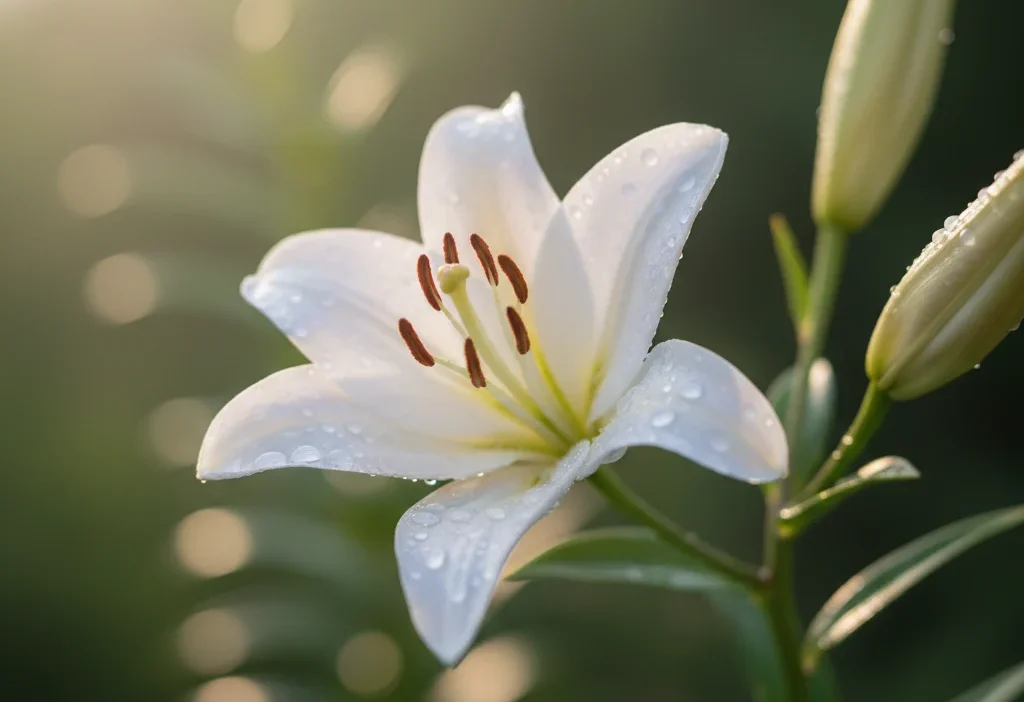
I’ll never forget the first time I met a Lily. I was in kindergarten, and a little girl with bright blue eyes and a smock covered in paint introduced herself. “I’m Lily,” she said, “like the flower.” It was simple, beautiful, and easy to remember. But as I grew older, I met more Lilys—some were artists, some were scientists, some were quiet, and some were the life of the party. It made me wonder, is there more to this name than just a pretty flower? What does the name Lily really mean, and where does its enduring charm come from? If you’re considering this name for your child or are just curious about its magic, you’ve come to the right place.
: The name Lily primarily means “pure” and “innocent,” derived from the Latin word “lilium” for the lily flower. It’s a classic, elegant, and nature-inspired name that evokes beauty, renewal, and grace.
✨ What Does the Name Lily Mean? A Blossoming Explanation
At its heart, the name Lily is intrinsically linked to the beautiful, fragrant flower of the same name. The word “Lily” comes from the Latin “lilium,” which itself has roots in the Greek word “leirion.” For centuries, the lily flower has been a powerful symbol in art, literature, and religion, representing purity, virtue, and renewal. Therefore, the name Lily carries these connotations directly. When you name a child Lily, you are bestowing upon them a name rich with positive associations of innocence, beauty, and fresh beginnings.
In short: Lily = A Purity Flower = A name symbolizing innocence, beauty, and renewal.
📜 The Origin and History of the Name Lily
The name Lily has a fascinating journey through history. While it feels modern and fresh today, its roots are ancient.
- Latin & Greek Origins: As mentioned, the name stems from the Latin “lilium” and Greek “leirion,” firmly planting it in the classical world.
- Biblical Significance: The “lily of the field” is mentioned in the Bible, specifically in the Sermon on the Mount, where it symbolizes God’s provision and care, untarnished by worldly toil. This cemented its association with purity and faith in Christian traditions.
- The Virgin Mary: In medieval art, the Virgin Mary was often depicted with white lilies, representing her purity and divine grace. This made Lily and its variations (like Lillian) popular choices for girls in Christian communities.
- Victorian Era: The Victorians were obsessed with the “language of flowers,” and giving someone a lily was a clear message of purity and refined beauty. This era saw a significant rise in Lily being used as a given name.
🌍 Lily Across Different Cultures
The lovely thing about the name Lily is that its appeal is nearly universal, though its meaning can have subtle shifts across cultures.
- English-Speaking World: Lily is a standalone name and a nickname for Elizabeth (meaning “God is my oath”), linking it to another classic name.
- France: The French version, “Lilie” or “Lily,” is equally chic and fashionable.
- Hebrew: In Hebrew, the name “Shoshana” means “lily” or “rose,” and it’s a traditional and beautiful name in its own right.
- Asia: While not a traditional Asian name, the lily flower is highly regarded. In China, it is a symbol of good luck and happy unions, often used in weddings.
🎨 Symbolism and Personality of the Name Lily
What kind of personality does the name Lily suggest? While every individual is unique, names carry certain energies and stereotypes.
- Purity and Innocence: This is the most dominant trait, thanks to its religious and historical ties.
- Beauty and Grace: The elegant appearance of the flower translates directly to the name.
- Renewal and Rebirth: As a flower that often blooms in spring and is associated with Easter, Lily symbolizes new beginnings.
- Peace and Serenity: The white lily, in particular, evokes a sense of calm and tranquility.
People often imagine a Lily as being kind-hearted, creative, and in tune with nature—a person with a gentle spirit and a strong sense of self.
📊 Popularity of the Name Lily Over Time
Lily has been a consistent favorite, but its popularity has seen significant peaks.
- Late 19th/Early 20th Century: Gained steady popularity.
- 1990s-2000s: Saw a massive surge, likely influenced by celebrities and characters. It has consistently been in the top 50 names for girls in the US, UK, Australia, and Canada for the past two decades.
- Today: While it has dipped slightly from its peak, Lily remains a hugely popular and well-loved name, sitting comfortably within the top 100. It’s a timeless choice that feels both classic and contemporary.
👶 Lily as a Nickname and Variations
Lily is wonderfully versatile. It can be a formal first name or an affectionate nickname for longer, more traditional names.
Common Variations and Related Names:
- Lillian: A classic name that Lily is often short for.
- Liliana: A more romantic, elaborate version.
- Lilia: A softer, more melodic variation.
- Lilith: A name with different, more powerful mythological roots, but shares the “Lil” sound.
- Lilybeth: A modern blend of Lily and Elizabeth.
🌟 Famous People Named Lily
The name’s popularity is undoubtedly boosted by the many talented and famous women who bear it.
- Lily Tomlin: The legendary comedian and actress.
- Lily Collins: The English-American actress known for her roles in “Emily in Paris” and “To the Bone.”
- Lily James: The British actress famous for “Cinderella” and “Downton Abbey.”
- Lily Aldridge: The American Victoria’s Secret model.
- Lily Allen: The British singer-songwriter known for her witty and sharp pop songs.
- Lily-Rose Depp: The French-American model and actress.
🎬 Fictional Characters Named Lily
Fictional Lilys often embody the name’s core traits of purity, kindness, and strength.
- Lily Potter: Harry Potter’s mother, whose love and sacrifice are the cornerstone of the entire series. She represents pure, protective love.
- Lily Aldrin: From “How I Met Your Mother,” a character who is kind, romantic, and the emotional center of her friend group.
- Lily Bart: The tragic heroine of Edith Wharton’s The House of Mirth, whose beauty and desire for a pure life are at odds with her social environment.
- Lily Loud: From “The Loud House,” a cheerful and adorable baby who often says the word “Boom”—showing the name can be fun and playful too!
💖 Is Lily a Good Name for Your Baby?
Choosing a name is a deeply personal decision. Here’s a breakdown of the pros and cons to help you decide.
✅ When to Use the Name Lily
- If you love nature-inspired names. It’s one of the most beautiful and recognizable flower names.
- If you value purity and classic elegance. It carries a timeless, virtuous quality.
- If you want a name that is easy to spell and pronounce. Its simplicity is a major advantage.
- If you want a name that is both soft and strong. It has a gentle sound but is borne by many powerful women.
❌ When You Might Choose a Different Name
- If you are concerned about popularity. While beautiful, it is a very common name, which might be a drawback for parents seeking something unique.
- If you prefer more gender-neutral or strong-sounding names. Lily is distinctly feminine and soft.
- If the religious connotations don’t align with your family’s beliefs.
Name Comparison Table
| Context | Example Name | Why It Works |
|---|---|---|
| Classic & Timeless | Lily | Elegant, pure, and universally loved. |
| Modern & Trendy | Poppy or Willow | Nature-inspired but feels more contemporary. |
| Formal & Elaborate | Lillian or Liliana | Offers the nickname “Lily” but has a more traditional, official feel. |
| Simple & Sweet | Rose | Another classic flower name that is short and powerful. |
🔄 Similar Names and Alternatives to Lily
If you love the vibe of Lily but want to explore other options, this table is for you.
| Name | Meaning | Vibe/When to Use |
|---|---|---|
| Iris | “Rainbow” | Another elegant flower name, slightly more unique but just as classic. |
| Violet | “Purple flower” | A vintage flower name that has made a huge comeback. |
| Daisy | “Day’s eye” | Cheerful, bright, and sunny. Less formal than Lily. |
| Chloe | “Young green shoot” | A beautiful nature name that means blooming and fertility. |
| Sophia | “Wisdom” | Shares the soft, classic, and feminine feel of Lily. |
| Grace | “Elegance & Blessing” | A virtue name that carries the same pure and simple elegance. |
🧠 The Psychology of Naming: Why Lily Endures
The enduring appeal of Lily isn’t an accident. Psychologically, we are drawn to names that are phonetically pleasant, easy to process, and carry positive associations. The soft “L” sounds in Lily are considered comforting and gentle. Furthermore, its link to a universally admired flower triggers positive imagery in our minds, making us feel favorably toward anyone who bears the name. It’s a name that feels both safe and special, a difficult balance to achieve.
❓ FAQs
Is Lily a biblical name?
While not a name of a person in the Bible, the “lily of the field” is a powerful symbol mentioned by Jesus, representing God’s care and the beauty of creation. This is a primary reason for its “pure” and “innocent” meaning.
What is the spiritual meaning of Lily?
Spiritually, the lily represents purity, commitment, rebirth, and fertility. It is often associated with the Virgin Mary in Christianity and is a common symbol of light and divinity.
Is Lily a formal name?
Yes, Lily is a formal given name in its own right. However, it can also be a nickname for more formal names like Lillian, Elizabeth, or Liliana.
What are some good middle names for Lily?
Lily pairs well with many middle names. Classic choices include Lily Grace, Lily Anne, or Lily Jane. For a more modern twist, consider Lily Maeve, Lily Juliet, or Lily Sage.
Is Lily a popular name?
Yes, Lily has been extremely popular for the last 20+ years in many English-speaking countries. It consistently ranks in the top 100 names for girls.
What is the male version of Lily?
There isn’t a direct male equivalent, as Lily is strongly feminine. However, the flower name “Lyle” (which means “the island”) has a similar sound, or you could consider the botanical name “Lilium.”
🌸 Conclusion
So, what does the name Lily mean? It’s so much more than just a flower. It’s a name steeped in history, blooming with symbolism, and brimming with a gentle, timeless grace. It means purity, it means beauty, and it means a fresh start. From the biblical fields to the pages of modern storybooks, Lily has maintained its status as a name that is both profoundly innocent and powerfully strong. Whether you choose it for your daughter, a character, or simply admire it from afar, the name Lily is, and will always be, a truly beautiful choice.

Hiromi Kawakami is a contemporary dream analyst and spiritual writer who explores the intersection of everyday life and dream symbolism. Her approach blends gentle observation with mystical insight, guiding readers to understand the spiritual significance of their dreams. Hiromi encourages self-reflection through the subtle messages of the subconscious.