Scrolling through messages, social media posts, or TikTok comments, you might have spotted “CBA” and paused, thinking, “What does that even mean?” I remember the first time I saw it — a friend replied to a weekend plan with “CBA 😅” — and I was completely confused. Was it rude? Polite? Funny?
Don’t worry — CBA is a casual, friendly, and sometimes cheeky slang term used widely online. It’s all about expressing that little feeling of “I just don’t feel like it” in the most compact way possible.
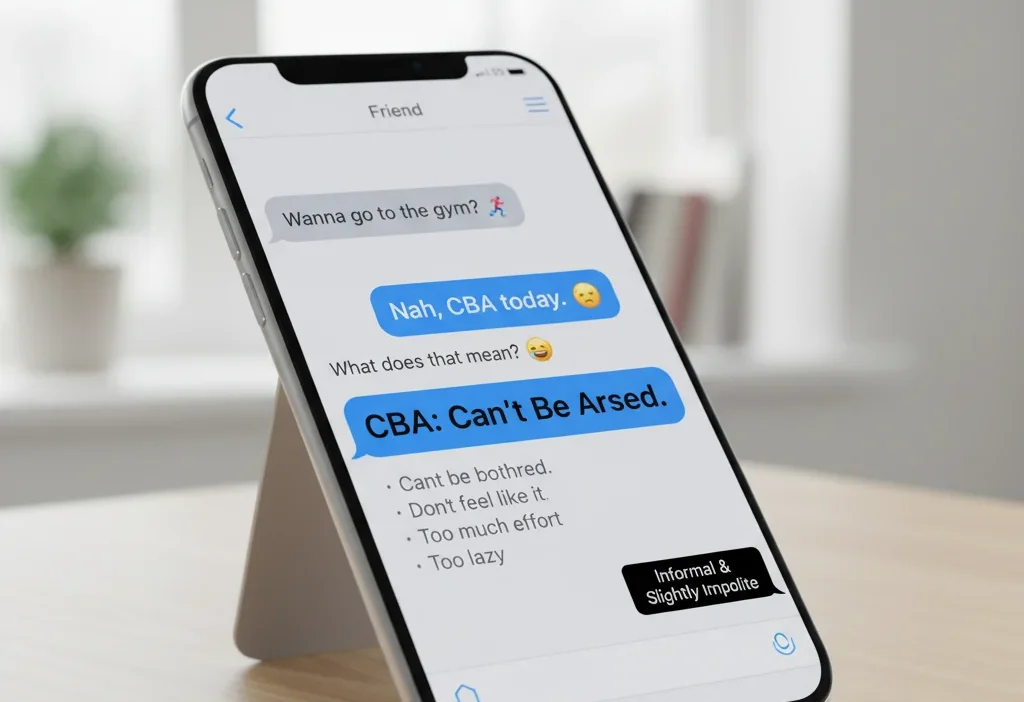
CBA means “Can’t Be Arsed.” It’s a casual, slightly cheeky way to say you don’t feel like doing something.
What Does CBA Mean in Text? 🧠
Full Form: Can’t Be Arsed
Meaning: When someone uses CBA, they are indicating that they lack the motivation, energy, or interest to do a task. It’s not aggressive — just blunt and casual.
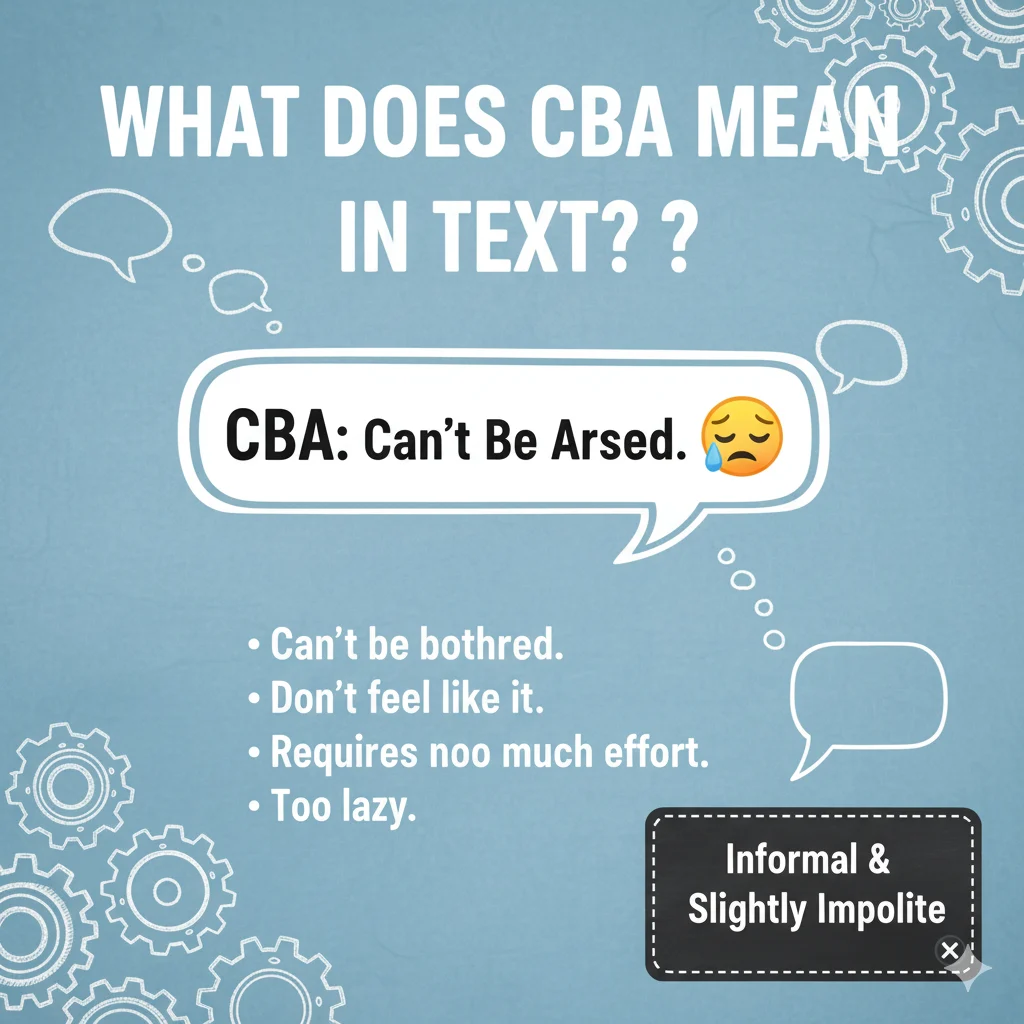
Think of it as the textual equivalent of shrugging and saying, “I really don’t want to bother with this.”
Examples in Context:
- A: “Want to clean the garage today?”
B: “Ugh, CBA 😩” - A: “Did you finish your essay?”
B: “CBA, I’ll do it later”
In short: CBA = Can’t Be Arsed = I don’t feel like doing this / too lazy to bother.
British vs American Use:
- UK: Very common in casual texting and online chats.
- US: Less common, but younger audiences online understand it, especially in memes or gaming chats.
Where Is CBA Commonly Used? 📱
CBA thrives in informal, online, and texting environments. Here’s where you’ll see it most often:
- Texting with friends 💬 – Short, casual, and perfect for quick replies.
- Snapchat & WhatsApp 📱 – Used in stories, private messages, and group chats.
- TikTok & Instagram comments 🎵 – Often as a humorous reply to memes or videos.
- Gaming chats 🎮 – Players express disinterest or laziness in tasks/missions.
- Forums & Reddit threads 💻 – Sometimes used in a sarcastic or humorous tone.
Tone:
- Casual & informal – fits perfectly with close friends or online communities.
- Not suitable for formal work emails, academic assignments, or professional texts.
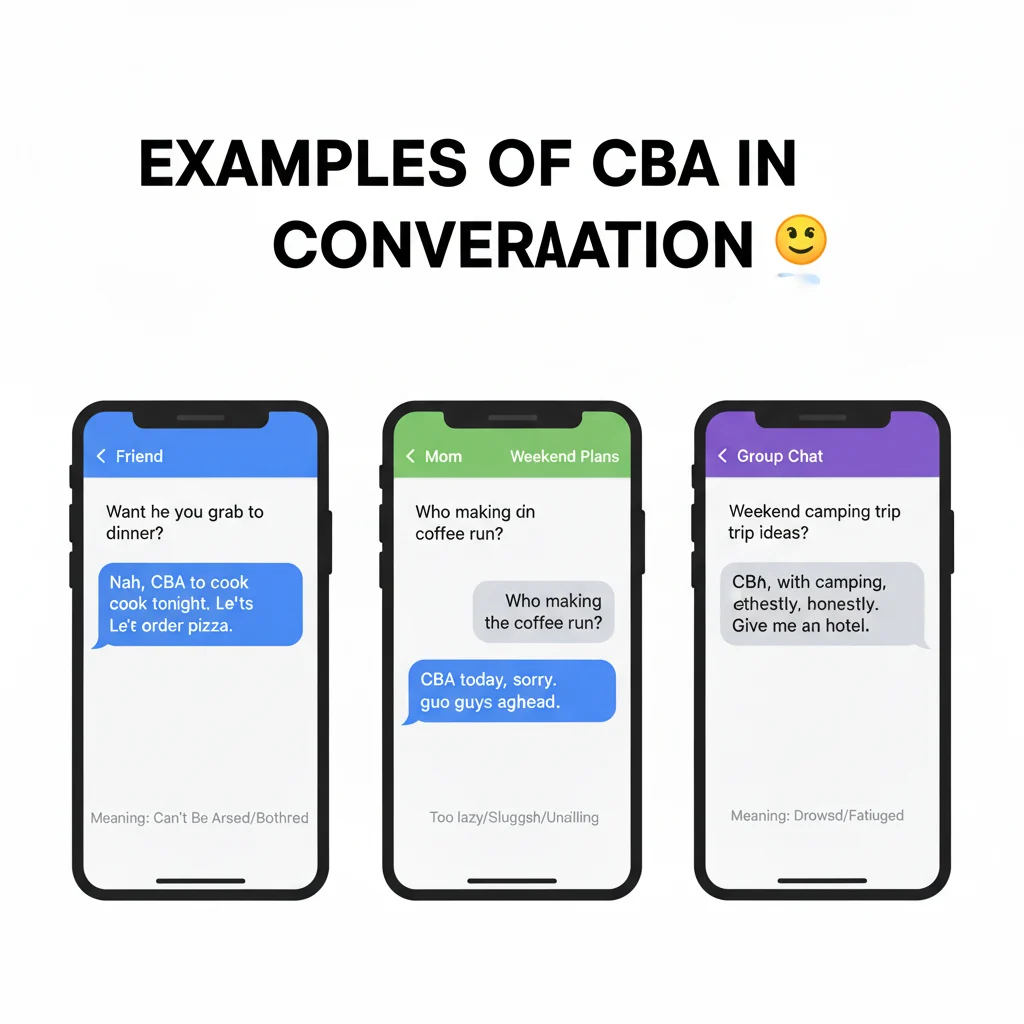
Examples of CBA in Conversation 💬
Here are 10 authentic examples to help you see how CBA is used in daily texting:
- A: “Want to help me move furniture?”
B: “CBA… maybe next time 😅” - A: “Can you pick up groceries?”
B: “Honestly, CBA 😩” - A: “Do you want to join the group project today?”
B: “CBA, let’s start tomorrow” - A: “Are you going to the gym?”
B: “CBA lol, too tired 😴” - A: “Did you finish your essay?”
B: “CBA rn, will do later” - A: “Help me pick an outfit for the party?”
B: “CBA… just wear anything 😆” - A: “Are you coming to the picnic?”
B: “CBA, not really feeling it” - A: “Can you call the plumber?”
B: “CBA… maybe tomorrow 😬” - A: “Homework done yet?”
B: “CBA, too lazy to start 😅” - A: “Do you want to play this game?”
B: “CBA, not in the mood 😭”
When to Use and When Not to Use CBA 🕓
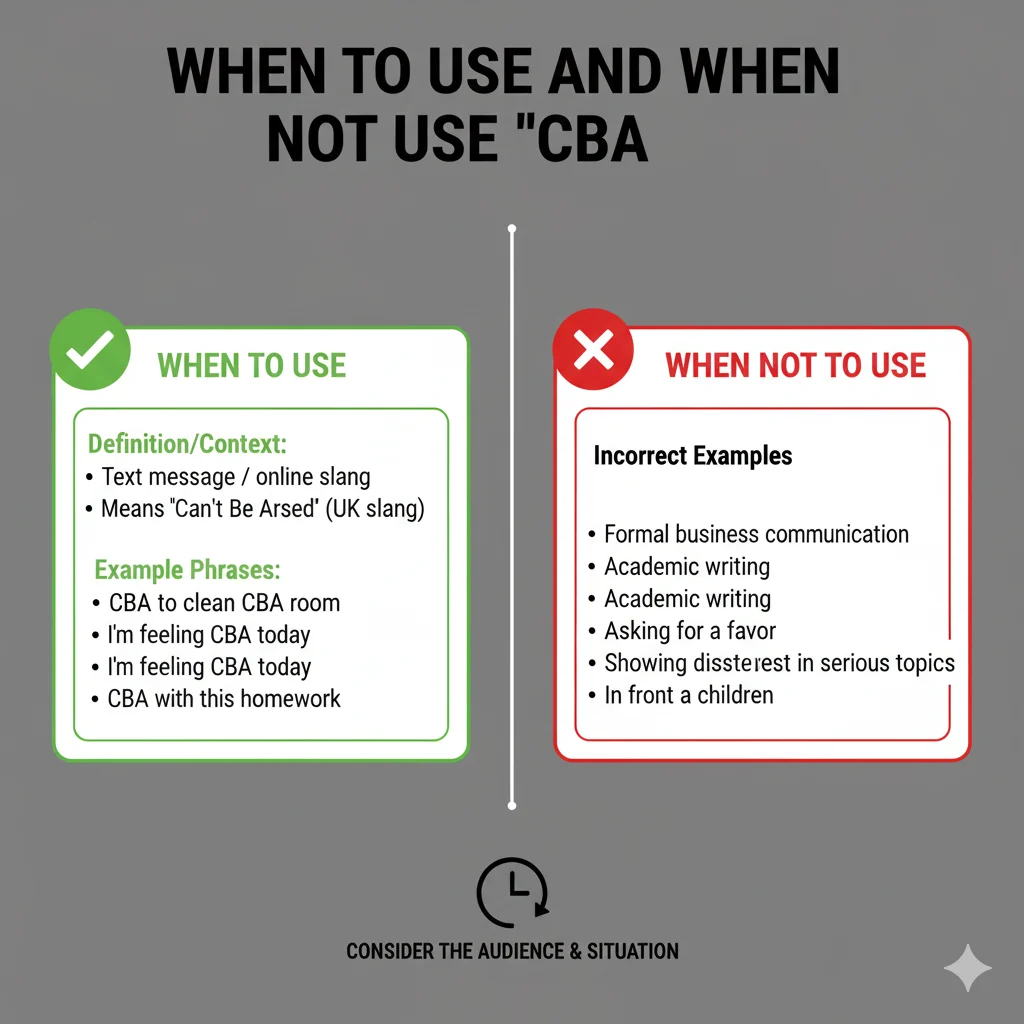
✅ When to Use
- With close friends in casual texting
- Online social media interactions (memes, comments)
- When you want to humorously express laziness or disinterest
- In gaming chats when tasks feel boring or tedious
❌ When Not to Use
- Professional or work emails
- Conversations with teachers, bosses, or authority figures
- Serious or urgent situations where politeness is required
Comparison Table:
| Context | Example Phrase | Why It Works |
|---|---|---|
| Friend Chat | “No rush, CBA 😄” | Casual & friendly |
| Work Chat | “Take your time.” | Polite & professional |
| “Please take your time to review this.” | Formal & clear | |
| Group Chat | “CBA, anyone else feel lazy? 😅” | Social, relatable tone |
Similar Slang Words or Alternatives 🔄
Here’s a comparison table with alternatives that express laziness, disinterest, or casual detachment:
| Slang | Meaning | When to Use |
|---|---|---|
| IDGAF | I don’t give a f*** | Expressing total disinterest, casual |
| Meh | Indifference / “whatever” | Casual, texting, memes |
| TBH | To be honest | Sharing honest opinions, casual or semi-formal |
| IDC | I don’t care | Informal, texting, social media |
| NVM | Never mind | Quick texting, casual conversation |
| Can’t be bothered | Literal phrase, same as CBA | Casual, friendly texts |
CBA in Pop Culture and Social Media 🌐
CBA is often used in memes, TikTok captions, and humorous tweets to show lazy, sarcastic, or relatable feelings. For example:
- Meme caption: “Monday morning vibes: CBA 😩”
- TikTok comment: “CBA doing homework, send help 😅”
- Twitter post: “CBA adulting today, just want to sleep”
It’s a way for people to bond over shared laziness or avoid doing something mundane.
FAQs About CBA ❓
Q1: Is CBA rude?
A: Among friends, it’s playful and casual. However, it can seem blunt or dismissive in professional or formal settings.
Q2: Can I use CBA in professional emails?
A: No. Stick with polite alternatives like “I am unable to…” or “I cannot commit to this task right now.”
Q3: Is CBA British slang?
A: Yes! It originated in the UK but has gained popularity worldwide in online communities.
Q4: What is the tone of CBA?
A: Casual, cheeky, humorous, sometimes slightly lazy. Not formal.
Q5: Are there variations of CBA?
A: Yes — spelling out “can’t be bothered” works too, or using similar slang like IDC or Meh.
Q6: Can I use CBA in texting strangers?
A: Only if the tone is casual. With strangers, it might seem rude or dismissive.
Q7: Can CBA be flirty?
A: Occasionally! If you’re joking about not doing something together, it can have a playful, teasing vibe.
Conclusion
CBA is a short, snappy, and very relatable slang term that captures the feeling of “I can’t be bothered” in just three letters. Whether you’re texting friends, commenting on memes, or joking in group chats, CBA communicates laziness, disinterest, or mild frustration with humor.
Remember: it’s casual, cheeky, and not suitable for formal settings. Next time you feel like saying “I really don’t feel like doing this,” drop a CBA 😎, and your friends will instantly understand.
By mastering slang like CBA, you’ll not only sound up-to-date in texting culture but also navigate online conversations more naturally and humorously.

Leonora Carrington is an imaginative storyteller and dream researcher, specializing in the spiritual and surreal aspects of dreams. She combines artistic insight with symbolic interpretation, helping readers uncover the messages woven into their nightly visions. Leonora believes that dreams are gateways to creativity and personal transformation.